|
That there should
be yet another addition of I AM THAT is not surprising,
for the sublimity of the words spoken by Sri Nisargadatta
Maharaj, their directness and the lucidity with which
they refer to the Highest have already made this book
a literature of paramount importance. In fact, many regard
it as the only book of spiritual teaching really worth
studying.
There are various
religions and systems of philosophy which claim to endow
human life with meaning. But they suffer from certain
inherent limitations. They couch into fine-sounding words
their traditional beliefs and ideologies, theological
or philosophical. Believers, however, discover the limited
range of meaning and applicability of these words, sooner
or later. They get disillusioned and tend to abandon the
systems, in the same way as scientific theories are abandoned,
when they are called in question by too much contradictory
empirical data.
When a system
of spiritual interpretation turns out to be unconvincing
and not capable of being rationally justified, many people
allow themselves to be converted to some other system.
After a while, however, they find limitations and contradictions
in the other system also. In this unrewarding pursuit
of acceptance and rejection what remains for them is only
scepticism and agnosticism, leading to a fatuous way of
living, engrossed in mere gross utilities of life, just
consuming material goods. Sometimes, however, though rarely,
scepticism gives rise to an intuition of a basic reality,
more fundamental than that of words, religions or philosophic
systems. Strangely, it is a positive aspect of scepticism.
It was in such a state of scepticism, but also having
an intuition of the basic reality, that I happened to
read Sri Nisargadatta Maharaj's I AM THAT. I was at once
struck by the finality and unassailable certitude of his
words. Limited by their very nature though words are,
I found the utterances of Maharaj transparent, polished
windows, as it were.
No book of spiritual
teachings, however, can replace the presence of the teacher
himself. Only the words spoken directly to you by the
Guru shed their opacity completely. In a Guru's presence
the last boundaries drawn by the mind vanish. Sri Nisargadatta
Maharaj is indeed such a Guru. He is not a preacher, but
he provides precisely those indications which the seeker
needs. The reality which emanates from him is inalienable
and Absolute. It is authentic. Having experienced the
verity of his words in the pages of I AM THAT, and being
inspired by it, many from the West have found their way
to Maharaj to seek enlightenment.
Maharaj's interpretation
of truth is not different from that of Jnana Yoga /Advaita
Vedanta. But, he has a way of his own. The multifarious
forms around us, says he, are constituted of the five
elements. They are transient, and in a state of perpetual
flux. Also they are governed by the law of causation.
All this applies to the body and the mind also, both of
which are transient and subject to birth and death. We
know that only by means of the bodily senses and the mind
can the world be known. As in the Kantian view, it is
a correlate of the human knowing subject, and, therefore,
has the fundamental structure of our way of knowing. This
means that time, space and causality are not 'objective',
or extraneous entities, but mental categories in which
everything is moulded. The existence and form of all things
depend upon the mind. Cognition is a mental product. And
the world as seen from the mind is a subjective and private
world, which changes continuously in accordance with the
restlessness of the mind itself.
In opposition
to the restless mind, with its limited categories -- intentionality,
subjectivity, duality etc. -- stands supreme the limitless
sense of 'I am'. The only thing I can be sure about is
that 'I am'; not as a thinking 'I am' in the Cartesian
sense, but without any predicates. Again and again Maharaj
draws our attention to this basic fact in order to make
us realise our 'I am-ness' and thus get rid of all self-made
prisons. He says: The only true statement is 'I am'. All
else is mere inference. By no effort can you change the
'I am' into 'I am-not'.
Behold, the real
experiencer is not the mind, but myself, the light in
which everything appears. Self is the common factor at
the root of all experience, the awareness in which everything
happens. The entire field of consciousness is only as
a film, or a speck, in 'I am'. This 'I am-ness' is, being
conscious of consciousness, being aware of itself. And
it is indescribable, because it has no attributes. It
is only being my self, and being my self is all that there
is. Everything that exists, exists as my self. There is
nothing which is different from me. There is no duality
and, therefore, no pain. There are no problems. It is
the sphere of love, in which everything is perfect. What
happens, happens spontaneously, without intentions --
like digestion, or the growth of the hair. Realise this,
and be free from the limitations of the mind.
Behold, the deep
sleep in which there is no notion of being this or that.
Yet 'I am' remains. And behold the eternal now.
Memory seems to being things to the present out of the
past, but all that happens does happen in the present
only. It is only in the timeless now that phenomena
manifest themselves. Thus, time and causality do not apply
in reality. I am prior to the world, body and mind.
I am the sphere in which they appear and disappear.
I am the source of them all, the universal power
by which the world with its bewildering diversity becomes
manifest.
In spite of its
primevality, however, the sense of 'I am' is not the Highest.
It is not the Absolute. The sense, or taste of 'I am-ness'
is not absolutely beyond time. Being the essence of the
five elements, it, in a way, depends upon the world. It
arises from the body, which, in its turn, is built by
food, consisting of the elements. It disappears when the
body dies, like the spark extinguishes when the incense
stick burns out. When pure awareness is attained, no need
exists any more, not even for 'I am', which is but a useful
pointer, a direction-indicator towards the Absolute. The
awareness 'I am' then easily ceases. What prevails is
that which cannot be described, that which is beyond words.
It is this 'state' which is most real, a state of pure
potentiality, which is prior to everything. The 'I am'
and the universe are mere reflections of it. It is this
reality which a jnani has realised.
The best that
you can do is listen attentively to the jnani --
of whom Sri Nisargadatta is a living example -- and to
trust and believe him. By such listening you will realise
that his reality is your reality. He helps you in seeing
the nature of the world and of the 'I am'. He urges you
to study the workings of the body and the mind with solemn
and intense concentration, to recognise that you are neither
of them and to cast them off. He suggests that you return
again and again to 'I am' until it is your only abode,
outside of which nothing exists; until the ego as a limitation
of 'I am', has disappeared. It is then that the highest
realisation will just happen effortlessly.
Mark the words
of the jnani, which cut across all concepts and
dogmas. Maharaj says: "until one becomes self-realised,
attains to knowledge of the self, transcends the self,
until then, all these cock-and-bull stories are provided,
all these concepts." Yes, they are concepts, even
'I am' is, but surely there are no concepts more precious.
It is for the seeker to regard them with the utmost seriousness,
because they indicate the Highest Reality. No better concepts
are available to shed all concepts.
I am thankful
to Sudhakar S. Dikshit, the editor, for inviting me to
write the Foreword to this new edition of I AM THAT and
thus giving me an opportunity to pay my homage to Sri
Nisargadatta Maharaj, who has expounded highest knowledge
in the simplest, clearest and the most convincing words.
Douwe Tiemersma
Philosophical Faculty
Erasmus Universiteit
Rotterdam, Holland
June, 1981
When asked about
the date of his birth the Master replied blandly that
he was never born!
Writing a biographical
note on Sri Nisargadatta Maharaj is a frustrating and
unrewarding task. For, not only the exact date of his
birth is unknown, but no verified facts concerning the
early years of his life are available. However, some of
his elderly relatives and friends say that he was born
in the month of March 1897 on a full moon day, which coincided
with the festival of Hanuman Jayanti, when Hindus pay
their homage to Hanuman, also named Maruti, the monkey-god
of Ramayana fame. And to associate his birth with this
auspicious day his parents named him Maruti.
Available information
about his boyhood and early youth is patchy and disconnected.
We learn that his father, Shivrampant, was a poor man,
who worked for some time as a domestic servant in Bombay
and, later, eked out his livelihood as a petty farmer
at Kandalgaon, a small village in the back woods of Ratnagiri
district of Maharashtra. Maruti grew up almost without
education. As a boy he assisted his father in such labours
as lay within his power -- tended cattle, drove oxen,
worked in the fields and ran errands. His pleasures were
simple, as his labours, but he was gifted with an inquisitive
mind, bubbling over with questions of all sorts.
His father had
a Brahmin friend named Vishnu Haribhau Gore, who was a
pious man and learned too from rural standards. Gore often
talked about religious topics and the boy Maruti listened
attentively and dwelt on these topics far more than anyone
would suppose. Gore was for him the ideal man -- earnest,
kind and wise.
When Maruti attained
the age of eighteen his father died, leaving behind his
widow, four sons and two daughters. The meagre income
from the small farm dwindled further after the old man's
death and was not sufficient to feed so many mouths. Maruti's
elder brother left the village for Bombay in search of
work and he followed shortly after. It is said that in
Bombay he worked for a few months as a low-paid junior
clerk in an office, but resigned the job in disgust. He
then took petty trading as a haberdasher and started a
shop for selling children's clothes, tobacco and hand-made
country cigarettes. This business is said to have flourished
in course of time, giving him some sort of financial security.
During this period he got married and had a son and three
daughters.
Childhood, youth,
marriage, progeny -- Maruti lived the usual humdrum and
eventless life of a common man till his middle age, with
no inkling at all of the sainthood that was to follow.
Among his friends during this period was one Yashwantrao
Baagkar, who was a devotee of Sri Siddharameshwar Maharaj,
a spiritual teacher of the Navnath Sampradaya,
a sect of Hinduism. One evening Baagkar took Maruti to
his Guru and that evening proved to be the turning point
in his life. The Guru gave him a mantra and instructions
in meditation. Early in his practice he started having
visions and occasionally even fell into trances. Something
exploded within him, as it were, giving birth to a cosmic
consciousness, a sense of eternal life. The identity of
Maruti, the petty shopkeeper, dissolved and the illuminating
personality of Sri Nisargadatta emerged.
Most people live
in the world of self-consciousness and do not have the
desire or power to leave it. They exist only for themselves;
all their effort is directed towards achievement of self-satisfaction
and self-glorification. There are, however, seers, teachers
and revealers who, while apparently living in the same
world, live simultaneously in another world also -- the
world of cosmic consciousness, effulgent with infinite
knowledge. After his illuminating experience Sri Nisargadatta
Maharaj started living such a dual life. He conducted
his shop, but ceased to be a profit-minded merchant. Later,
abandoning his family and business he became a mendicant,
a pilgrim over the vastness and variety of the Indian
religious scene. He walked barefooted on his way to the
Himalayas where he planned to pass the rest of his years
in quest of a eternal life. But he soon retraced his steps
and came back home comprehending the futility of such
a quest. Eternal life, he perceived, was not to be sought
for; he already had it. Having gone beyond the I-am-the-body
idea, he had acquired a mental state so joyful, peaceful
and glorious that everything appeared to be worthless
compared to it. He had attained self-realisation.
Uneducated though
the Master is, his conversation is enlightened to an extraordinary
degree. Though born and brought up in poverty, he is the
richest of the rich, for he has the limitless wealth of
perennial knowledge, compared to which the most fabulous
treasures are mere tinsel. He is warm-hearted and tender,
shrewdly humorous, absolutely fearless and absolutely
true -- inspiring, guiding and supporting all who come
to him.
Any attempt to
write a biographical not on such a man is frivolous and
futile. For he is not a man with a past or future; he
is the living present -- eternal and immutable. He is
the self that has become all things.
I met Sri Nisargadatta
Maharaj some years back and was impressed with the spontaneous
simplicity of his appearance and behaviour and his deep
and genuine earnestness in expounding his experience.
However humble
and difficult to discover his little tenement in the back
lanes of Bombay, many have found their way there. Most
of them are Indians, conversing freely in their native
language, but there were also many foreigners who needed
a translator. Whenever I was present the task would fall
to me. Many of the questions put and answers given were
so interesting and significant that a tape-recorder was
brought in. While most of the tapes were of the regular
Marathi-English variety, some were polygot scrambles of
several Indian and European languages. Later, each tape
was deciphered and translated into English.
It was not easy
to translate verbatim and at the same time avoid tedious
repetitions and reiterations. It is hoped that the present
translation of the tape-recordings will not reduce the
impact of this clear-minded, generous and in many ways
an unusual human being.
A Marathi version
of these talks, verified by Sri Nisargadatta Maharaj himself,
has been separately published.
Maurice Frydman
Translator
Bombay
October 16, 1973
The present edition
of I AM THAT is a revised and re-edited version of the
101 talks that appeared in two volumes in earlier editions.
Not only the matter has now been re-set in a more readable
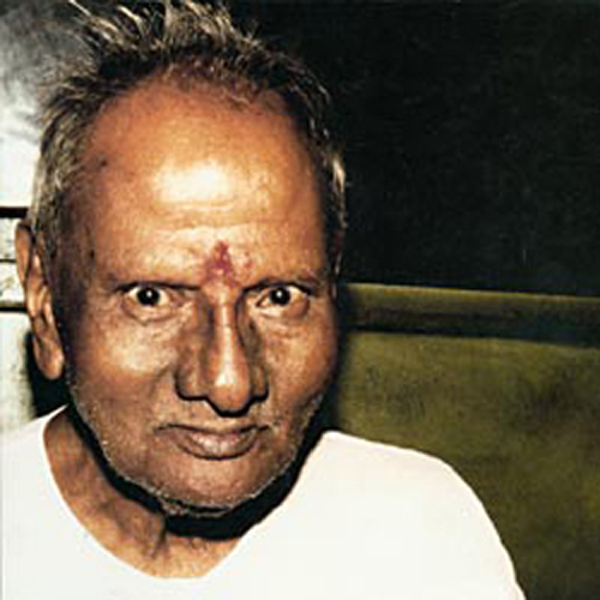
typeface and with chapter headings, but new pictures of
Sri Nisargadatta Maharaj have been included and the appendices
contain some hitherto unpublished valuable material.
I draw special
attention to the reader to the contribution entitled 'Nisarga
Yoga', in which my esteemed friend, the late Maurice Frydman,
has succinctly presented the teaching of Maharaj. Simplicity
and humility are the keynotes of his teachings, as Maurice
observes. The Master does not propound any intellectual
concept or doctrine. He does not put forward any pre-conditions
before the seekers and is happy with them as they are.
In fact Sri Nisargadatta Maharaj is peculiarly free from
all disparagement and condemnation; the sinner and the
saint are merely exchanging notes; the saint has sinned,
the sinner can be sanctified. It is time that divides
them; it is time that will bring them together. The teacher
does not evaluate; his sole concern is with 'suffering
and the ending of suffering'. He knows from his personal
and abiding experience that the roots of sorrow are in
the mind and it is the mind that must be freed from its
distorting and destructive habits. Of these the identification
of the self with its projections is most fatal. By precept
and example Sri Nisargadatta Maharaj shows a short-cut,
a-logical but empirically sound. It operates, when understood.
Revising and
editing of I AM THAT has been for me a pilgrimage to my
inner self -- at once ennobling and enlightening. I have
done my work in a spirit of dedication, with great earnestness.
I have treated the questions of every questioner as mine
own questions and have imbibed the answers of the Master
with a mind emptied of all it knew. However, in this process
of what may be called a two-voiced meditation, it is possible
that at places I may have failed in the cold-blooded punctiliousness
about the syntax and punctuation, expected of an editor.
For such lapses, if any, I seek forgiveness of the reader.
Before closing,
I wish to express my heart-felt thanks to Professor Douwe
Tiemersma of the Philosophical Faculty Erasmus, Universieit,
Rottendam, Holland for contributing a new Foreword to
this edition. That he acceeded to my request promptly
makes me feel all the more grateful.
Sudhakar S. Dikshit
Editor
Bombay,
July 1981
Questioner:
It is a matter of daily experience that on waking up the
world suddenly appears. Where does it come from?
Maharaj:
Before anything can come into being there must be somebody
to whom it comes. All appearance and disappearance presupposes
a change against some changeless background.
Q: Before
waking up I was unconscious.
M: In
what sense? Having forgotten, or not having experienced?
Don't you experience even when unconscious? Can you exist
without knowing? A lapse in memory: is it a proof of non-existence?
And can you validly talk about your own non-existence
as an actual experience? You cannot even say that your
mind did not exist. Did you not wake up on being called?
And on waking up, was it not the sense 'I am' that came
first? Some seed consciousness must be existing even during
sleep, or swoon. On waking up the experience runs: 'I
am -- the body -- in the world.' It may appear to arise
in succession but in fact it is all simultaneous, a single
idea of having a body in a world. Can there be the sense
of 'I am' without being somebody or other?
Q: I
am always somebody with its memories and habits. I know
no other 'I am'.
M: Maybe
something prevents you from knowing? When you do not know
something which others know, what do you do?
Q: I
seek the source of their knowledge under their instruction.
M: Is
it not important to you to know whether you are a mere
body, or something else? Or, maybe nothing at all? Don't
you see that all your problems are your body's problems
-- food, clothing, shelter, family, friends, name, fame,
security, survival -- all these lose their meaning the
moment you realise that you may not be a mere body.
Q: What
benefit is there in knowing that I am not the body?
M: Even
to say that you are not the body is not quite true. In
a way you are all the bodies, hearts and minds and much
more. Go deep into the sense of 'I am' and you will find.
How do you find a thing you have mislaid or forgotten?
You keep it in your mind until you recall it. The sense
of being, of 'I am' is the first to emerge. Ask yourself
whence it comes, or just watch it quietly. When the mind
stays in the 'I am' without moving, you enter a state
which cannot be verbalised but can be experienced. All
you need to do is try and try again. After all the
sense 'I am' is always with you, only you have attached
all kinds of things to it -- body, feelings, thoughts,
ideas, possessions etc. All these self-identifications
are misleading. Because of them you take yourself to be
what you are not.
Q: Then
what am I?
M: It
is enough to know what you are not. You need not know
what you are. For as long as knowledge means description
in terms of what is already known, perceptual, or conceptual,
there can be no such thing as self-knowledge, for what
you are cannot be described, except as except as
total negation. All you can say is: 'I am not this, I
am not that'. You cannot meaningfully say 'this is what
I am'. It just makes no sense. What you can point out
as 'this' or 'that' cannot be yourself. Surely, you can
not be 'something' else. You are nothing perceivable,
or imaginable. Yet, without you there can be neither perception
nor imagination. You observe the heart feeling, the mind
thinking, the body acting; the very act of perceiving
shows that you are not what you perceive. Can there be
perception, experience without you? An experience must
'belong'. Somebody must come and declare it as his own.
Without an experiencer the experience is not real. It
is the experiencer that imparts reality to experience.
An experience which you cannot have, of what value is
it to you?
Q: The
sense of being an experiencer, the sense of 'I am', is
it not also an experience?
M: Obviously,
every thing experienced is an experience. And in every
experience there arises the experiencer of it. Memory
creates the illusion of continuity. In reality each experience
has its own experiencer and the sense of identity is due
to the common factor at the root of all experiencer-experience
relations. Identity and continuity are not the same. Just
as each flower has its own colour, but all colours are
caused by the same light, so do many experiences appear
in the undivided and indivisible awareness, each separate
in memory, identical in essence. This essence is the root,
the foundation, the timeless and spaceless 'possibility'
of all experience.
Q: How
do I get at it?
M: You
need not get at it, for you are it. It will get
at you, if you give it a chance. Let go your attachment
to the unreal and the real will swiftly and smoothly step
into its own. Stop imagining yourself being or doing this
or that and the realisation that you are the source and
heart of all will dawn upon you. With this will come great
love which is not choice or predilection, nor attachment,
but a power which makes all things love-worthy and lovable.
Questioner:
Maharaj, you are sitting in front of me and I am here
at your feet. What is the basic difference between us?
Maharaj:
There is no basic difference.
Q: Still
there must be some real difference, I come to you, you
do not come to me.
M: Because
you imagine differences, you go here and there in search
of 'superior' people.
Q: You
too are a superior person. You claim to know the real,
while I do not.
M: Did
I ever tell you that you do not know and, therefore, you
are inferior? Let those who invented such distinctions
prove them. I do not claim to know what you do not. In
fact, I know much less than you do.
Q: Your
words are wise, your behaviour noble, your grace all-powerful.
M: I
know nothing about it all and see no difference between
you and me. My life is a succession of events, just like
yours. Only I am detached and see the passing show as
a passing show, while you stick to things and move along
with them.
Q: What
made you so dispassionate?
M: Nothing
in particular. It so happened that I trusted my Guru.
He told me I am nothing but my self and I believed him.
Trusting him, I behaved accordingly and ceased caring
for what was not me, nor mine.
Q: Why
were you lucky to trust your teacher fully, while our
trust is nominal and verbal?
M: Who
can say? It happened so. Things happen without cause and
reason and, after all, what does it matter, who is who?
Your high opinion of me is your opinion only. Any moment
you may change it. Why attach importance to opinions,
even your own?
Q: Still,
you are different. Your mind seems to be always quiet
and happy. And miracles happen round you.
M: I
know nothing about miracles, and I wonder whether nature
admits exceptions to her laws, unless we agree that everything
is a miracle. As to my mind, there is no such thing. There
is consciousness in which everything happens. It is quite
obvious and within the experience of everybody. You just
do not look carefully enough. Look well, and see what
I see.
Q: What
do you see?
M: I
see what you too could see, here and now, but for the
wrong focus of your attention. You give no attention to
your self. Your mind is all with things, people and ideas,
never with your self. Bring your self into focus, become
aware of your own existence. See how you function, watch
the motives and the results of your actions. Study the
prison you have built around yourself by inadvertence.
By knowing what you are not, you come to know your self.
The way back to your self is through refusal and rejection.
One thing is certain: the real is not imaginary, it is
not a product of the mind. Even the sense 'I am' is not
continuous, though it is a useful pointer; it shows where
to seek, but not what to seek. Just have a good look at
it. Once you are convinced that you cannot say truthfully
about your self anything except 'I am', and that nothing
that can be pointed at, can be your self, the need for
the 'I am' is over -- you are no longer intent on verbalising
what you are. All you need is to get rid of the tendency
to define your self. All definitions apply to your body
only and to its expressions. Once this obsession with
the body goes, you will revert to your natural state,
spontaneously and effortlessly. The only difference between
us is that I am aware of my natural state, while you are
bemused. Just like gold made into ornaments has no advantage
over gold dust, except when the mind makes it so, so are
we one in being -- we differ only in appearance. We discover
it by being earnest, by searching, enquiring, questioning
daily and hourly, by giving one's life to this discovery.
Questioner:
As I can see, there is nothing wrong with my body nor
with my real being. Both are not of my making and need
not be improved upon. What has gone wrong is the 'inner
body', call it mind, consciousness, antahkarana,
whatever the name.
Maharaj:
What do you consider to be wrong with your mind?
Q: It
is restless, greedy of the pleasant and afraid of the
unpleasant.
M: What
is wrong with its seeking the pleasant and shirking the
unpleasant? Between the banks of pain and pleasure the
river of life flows. It is only when the mind refuses
to flow with life, and gets stuck at the banks, that it
becomes a problem. By flowing with life I mean acceptance
-- letting come what comes and go what goes. Desire not,
fear not, observe the actual, as and when it happens,
for you are not what happens, you are to whom it happens.
Ultimately even the observer you are not. You are the
ultimate potentiality of which the all-embracing consciousness
is the manifestation and expression.
Q: Yet,
between the body and the self there lies a cloud of thoughts
and feelings, which neither serves the body nor the self.
These thoughts and feelings are flimsy, transient and
meaningless, mere mental dust that blinds and chokes,
yet they are there, obscuring and destroying.
M: Surely,
the memory of an event cannot pass for the event itself.
Nor can the anticipation. There is something exceptional,
unique, about the present event, which the previous, or
the coming do not have. There is a livingness about it,
an actuality; it stands out as if illuminated. There is
the 'stamp of reality' on the actual, which the past and
the future do not have.
Q: What
gives the present that 'stamp of reality'?
M: There
is nothing peculiar in the present event to make it different
from the past and future. For a moment the past was actual
and the future will become so. What makes the present
so different? Obviously, my presence. I am real for I
am always now, in the present, and what is with
me now shares in my reality. The past is in memory, the
future -- in imagination. There is nothing in the present
event itself that makes it stand out as real. It may be
some simple, periodical occurrence, like the striking
of the clock. In spite of our knowing that the successive
strokes are identical, the present stroke is quite different
from the previous one and the next -- as remembered, or
expected. A thing focussed in the now is with me, for
I am ever present; it is my own reality that I impart
to the present event.
Q: But
we deal with things remembered as if they were real.
M: We
consider memories, only when they come into the present
The forgotten is not counted until one is reminded --
which implies, bringing into the now.
Q: Yes,
I can see there is in the now some unknown factor that
gives momentary reality to the transient actuality.
M: You
need not say it is unknown, for you see it in constant
operation. Since you were born, has it ever changed? Things
and thoughts have been changing all the time. But the
feeling that what is now is real has never changed, even
in dream.
Q: In
deep sleep there is no experience of the present reality.
M: The
blankness of deep sleep is due entirely to the lack of
specific memories. But a general memory of well-being
is there. There is a difference in feeling when we say
'I was deeply asleep' from 'I was absent'.
Q: We
shall repeat the question we began with: between life's
source and life's expression (which is the body), there
is the mind and its ever-changeful states. The stream
of mental states is endless, meaningless and painful.
Pain is the constant factor. What we call pleasure is
but a gap, an interval between two painful states. Desire
and fear are the weft and warp of living, and both are
made of pain. Our question is: can there be a happy mind?
M: Desire
is the memory of pleasure and fear is the memory of pain.
Both make the mind restless. Moments of pleasure are merely
gaps in the stream of pain. How can the mind be happy?
Q: That
is true when we desire pleasure or expect pain. But there
are moments of unexpected, unanticipated joy. Pure joy,
uncontaminated by desire -- unsought, undeserved, God-given.
M: Still,
joy is joy only against a background of pain.
Q: Is
pain a cosmic fact, or purely mental?
M: The
universe is complete and where there is completeness,
where nothing lacks, what can give pain?
Q: The
Universe may be complete as a whole, but incomplete in
details.
M: A
part of the whole seen in relation to the whole is also
complete. Only when seen in isolation it becomes deficient
and thus a seat of pain. What makes for isolation?
Q: Limitations
of the mind, of course. The mind cannot see the whole
for the part.
M: Good
enough. The mind, by its very nature, divides and opposes.
Can there be some other mind, which unites and harmonises,
which sees the whole in the part and the part as totally
related to the whole?
Q: The
other mind -- where to look for it?
M: In
the going beyond the limiting, dividing and opposing mind.
In ending the mental process as we know it. When this
comes to an end, that mind is born.
Q: In
that mind, the problem of joy and sorrow exist no longer?
M: Not
as we know them, as desirable or repugnant. It becomes
rather a question of love seeking expression and meeting
with obstacles. The inclusive mind is love in action,
battling against circumstances, initially frustrated,
ultimately victorious.
Q: Between
the spirit and the body, is it love that provides the
bridge?
M: What
else? Mind creates the abyss, the heart crosses it.
Questioner:
On several occasions the question was raised as to whether
the universe is subject to the law of causation, or does
it exist and function outside the law. You seem to hold
the view that it is uncaused, that everything, however
small, is uncaused, arising and disappearing for no known
reason whatsoever.
Maharaj:
Causation means succession in time of events in space,
the space being physical or mental. Time, space, causation
are mental categories, arising and subsiding with the
mind.
Q: As
long as the mind operates, causation is a valid law.
M: Like
everything mental, the so-called law of causation contradicts
itself. No thing in existence has a particular cause;
the entire universe contributes to the existence of even
the smallest thing; nothing could be as it is without
the universe being what it is. When the source and ground
of everything is the only cause of everything, to speak
of causality as a universal law is wrong. The universe
is not bound by its content, because its potentialities
are infinite; besides it is a manifestation, or expression
of a principle fundamentally and totally free.
Q: Yes,
one can see that ultimately to speak of one thing being
the only cause of another thing is altogether wrong. Yet,
in actual life we invariably initiate action with a view
to a result.
M: Yes,
there is a lot of such activity going on, because of ignorance.
'Would people know that nothing can happen unless the
entire universe makes it happen, they would achieve much
more with less expenditure of energy.
Q: If
everything is an expression of the totality of causes,
how can we talk of a purposeful action towards an achievement?
M: The
very urge to achieve is also an expression of the total
universe. It merely shows that the energy potential has
risen at a particular point. It is the illusion of time
that makes you talk of causality. When the past and the
future are seen in the timeless now, as parts of
a common pattern, the idea of cause-effect loses its validity
and creative freedom takes its place.
Q: Yet,
I cannot see how can anything come to be without a cause.
M: When
I say a thing is without a cause, I mean it can be without
a particular cause. Your own mother was needed to give
you birth; But you could not have been born without the
sun and the earth. Even these could not have caused your
birth without your own desire to be born. It is desire
that gives birth, that gives name and form. The desirable
is imagined and wanted and manifests itself as something
tangible or conceivable. Thus is created the world in
which we live, our personal world. The real world is
beyond the mind's ken; we see it through the net of our
desires, divided into pleasure and pain, right and wrong,
inner and outer. To see the universe as it is, you must
step beyond the net. It is not hard to do so, for the
net is full of holes.
Q: What
do you mean by holes? And how to find them?
M: Look
at the net and its many contradictions. You do and undo
at every step. You want peace, love, happiness and work
hard to create pain, hatred and war. You want longevity
and overeat, you want friendship and exploit. See your
net as made of such contradictions and remove them --
your very seeing them will make them go.
Q: Since
my seeing the contradiction makes it go, is there no causal
link between my seeing and its going?
M: Causality,
even as a concept, does not apply to chaos.
Q: To
what extent is desire a causal factor?
M: One
of the many. For everything there are innumerable causal
factors. But the source of all that is, is the Infinite
Possibility, the Supreme Reality, which is in you and
which throws its power and light and love on every experience.
But, this source is not a cause and no cause is a source.
Because of that, I say everything is uncaused. You may
try to trace how a thing happens, but you cannot find
out why a thing is as it is. A thing is as it is,
because the universe is as it is.
Questioner:
Is the witness-consciousness permanent or not?
Maharaj:
It is not permanent. The knower rises and sets with the
known. That in which both the knower and the known arise
and set, is beyond time. The words permanent or eternal
do not apply.
Q: In
sleep there is neither the known, nor the knower. What
keeps the body sensitive and receptive?
M: Surely
you cannot say the knower was absent. The experience of
things and thoughts was not there, that is all. But the
absence of experience too is experience. It is like entering
a dark room and saying: 'I see nothing'. A man blind from
birth knows not what darkness means. Similarly, only the
knower knows that he does not know. Sleep is merely a
lapse in memory. Life goes on.
Q: And
what is death?
M: It
is the change in the living process of a particular body.
Integration ends and disintegration sets in.
Q: But
what about the knower. With the disappearance of the body,
does the knower disappear?
M: Just
as the knower of the body appears at birth, so he disappears
at death.
Q: And
nothing remains?
M: Life
remains. Consciousness needs a vehicle and an instrument
for its manifestation. When life produces another body,
another knower comes into being,
Q: Is
there a causal link between the successive bodyknowers,
or body-minds?
M: Yes,
there is something that may be called the memory body,
or causal body, a record of all that was thought, wanted
and done. It is like a cloud of images held together
Q: What
is this sense of a separate existence?
M: It
is a reflection in a separate body of the one reality.
In this reflection the unlimited and the limited are confused
and taken to be the same. To undo this confusion is the
purpose of Yoga.
Q: Does
not death undo this confusion?
M: In
death only the body dies. Life does not, consciousness
does not, reality does not. And the life is never so alive
as after death.
Q: But
does one get reborn?
M: What
was born must die. Only the unborn is deathless. Find
what is it that never sleeps and never wakes, and whose
pale reflection is our sense of 'I'.
Q: How
am I to go about this finding out?
M: How
do you go about finding anything? By keeping your mind
and heart in it. Interest there must be and steady remembrance.
To remember what needs to be remembered is the secret
of success. You come to it through earnestness.
Q: Do
you mean to say that mere wanting to find out is enough?
Surely, both qualifications and opportunities are needed.
M: These
will come with earnestness. What is supremely important
is to be free from contradictions: the goal and the way
must not be on different levels; life and light must not
quarrel; behaviour must not betray belief. Call it honesty,
integrity, wholeness; you must not go back, undo, uproot,
abandon the conquered ground. Tenacity of purpose and
honesty in pursuit will bring you to your goal.
Q: Tenacity
and honesty are endowments, surely! Not a trace of them
I have.
M: All
will come as you go on. Take the first step first. All
blessings come from within. Turn within. 'l am' you know.
Be with it all the time you can spare, until you revert
to it spontaneously. There is no simpler and easier way.
Questioner:
All teachers advise to meditate. What is the purpose of
meditation?
Maharaj:
We know the outer world of sensations and actions, but
of our inner world of thoughts and feelings we know very
little. The primary purpose of meditation is to become
conscious of, and familiar with, our inner life. The ultimate
purpose is to reach the source of life and consciousness.
Incidentally
practice of meditation affects deeply our character. We
are slaves to what we do not know; of what we know we
are masters. Whatever vice or weakness in ourselves we
discover and understand its causes and its workings, we
overcome it by the very knowing; the unconscious dissolves
when brought into the conscious. The dissolution of the
unconscious releases energy; the mind feels adequate and
become quiet.
Q: What
is the use of a quiet mind?
M: When
the mind is quiet, we come to know ourselves as the pure
witness. We withdraw from the experience and its experiencer
and stand apart in pure awareness, which is between and
beyond the two. The personality, based on self-identification,
on imagining oneself to be something: 'I am this, I am
that', continues, but only as a part of the objective
world. Its identification with the witness snaps.
Q: As
I can make out, I live on many levels and life on each
level requires energy. The self by its very nature delights
in everything and its energies flow outwards. Is it not
the purpose of meditation to dam up the energies on the
higher levels, or to push them back and up, so as to enable
the higher levels to prosper also?
M: It
is not so much the matter of levels as of gunas
(qualities). Meditation is a sattvic activity and
aims at complete elimination of tamas (inertia)
and rajas (motivity). Pure sattva (harmony)
is perfect freedom from sloth and restlessness.
Q: How
to strengthen and purify the sattva?
M: The
sattva is pure and strong always. It is like the
sun. It may seem obscured by clouds and dust, but only
from the point of view of the perceiver. Deal with the
causes of obscuration, not with the sun.
Q: What
is the use of sattva?
M: What
is the use of truth, goodness, harmony, beauty? They are
their own goal. They manifest spontaneously and effortlessly,
when things are left to themselves, are not interfered
with, not shunned, or wanted, or conceptualised, but just
experienced in full awareness, such awareness itself is
sattva. It does not make use of things and people
-- it fulfils them.
Q: Since
I cannot improve sattva, am I to deal with tamas
and rajas only? How can I deal with them?
M: By
watching their influence in you and on you. Be aware of
them in operation, watch their expressions in your thoughts,
words and deeds, and gradually their grip on you will
lessen and the clear light of sattva will emerge.
It is neither difficult, nor a protracted process; earnestness
is the only condition of success.
Questioner:
There are very interesting books written by apparently
very competent people, in which the illusoriness of the
world is denied (though not its transitoriness). According
to them, there exists a hierarchy of beings, from the
lowest to the highest; on each level the complexity of
the organism enables and reflects the depth, breadth and
intensity of consciousness, without any visible or knowable
culmination. One law supreme rules throughout: evolution
of forms for the growth and enrichment of consciousness
and manifestation of its infinite potentialities.
Maharaj:
This may or may not be so. Even if it is, it is only so
from the mind's point of view, but In fact the entire
universe (mahadakash) exists only in consciousness
(chidakash), while I have my stand in the Absolute
(paramakash). In pure being consciousness arises;
in consciousness the world appears and disappears. All
there is is me, all there is is mine. Before
all beginnings, after all endings -- I am. All has its
being in me, in the 'I am', that shines in every living
being. Even not-being is unthinkable without me. Whatever
happens, I must be there to witness it.
Q: Why
do you deny being to the world?
M: I
do not negate the world. I see it as appearing in consciousness,
which is the totality of the known in the immensity of
the unknown.
What begins and
ends is mere appearance. The world can be said to appear,
but not to be. The appearance may last very long on some
scale of time, and be very short on another, but ultimately
it comes to the same. Whatever is time bound is momentary
and has no reality.
Q: Surely,
you see the actual world as it surrounds you. You seem
to behave quite normally!
M: That
is how it appears to you. What in your case occupies the
entire field of consciousness, is a mere speck in mine.
The world lasts, but for a moment. It is your memory that
makes you think that the world continues. Myself, I don't
live by memory. I see the world as it is, a momentary
appearance in consciousness.
Q: In
your consciousness?
M: All
idea of 'me' and 'mine', even of 'I am' is in consciousness.
Q: Is
then your 'absolute being' (paramakash) un-consciousness?
M: The
idea of un-consciousness exists in consciousness only.
Q: Then,
how do you know you are in the supreme state?
M: Because
I am in it. It is the only natural state.
Q: Can
you describe it?
M: Only
by negation, as uncaused, independent, unrelated, undivided,
uncomposed, unshakable, unquestionable, unreachable by
effort. Every positive definition is from memory and,
therefore, inapplicable. And yet my state is supremely
actual and, therefore, possible, realisable, attainable.
Q: Are
you not immersed timelessly in an abstraction?
M: Abstraction
is mental and verbal and disappears in sleep, or swoon;
it reappears in time; I am in my own state (swarupa)
timelessly in the now. Past and future are in mind
only -- I am now.
Q: The
world too is now.
M: Which
world?
Q: The
world around us.
M: It
is your world you have in mind, not mine. What do you
know of me, when even my talk with you is in your world
only? You have no reason to believe that my world is identical
with yours. My world is real, true, as it is perceived,
while yours appears and disappears, according to the state
of your mind. Your world is something alien, and you are
afraid of it. My world is myself. I am at home.
Q: If
you are the world, how can you be conscious of it? Is
not the subject of consciousness different from its object?
M: Consciousness
and the world appear and disappear together, hence they
are two aspects of the same state.
Q: In
sleep I am not, and the world continues.
M: How
do you know?
Q: On
waking up I come to know. My memory tells me.
M: Memory
is in the mind. The mind continues in sleep.
Q: It
is partly in abeyance.
M: But
its world picture is not affected. As long as the mind
is there, your body and your world are there. Your world
is mind-made, subjective, enclosed within the mind, fragmentary,
temporary, personal, hanging on the thread of memory.
Q: So
is yours?
M: Oh
no. I live in a world of realities, while yours is of
imagination. Your world is personal, private, unshareable,
intimately your own. Nobody can enter it, see as you see,
hear as you hear, feel your emotions and think your thoughts.
In your world you are truly alone, enclosed in your ever-changing
dream, which you take for life. My world is an open world,
common to all, accessible to all. In my world there is
community, insight, love, real quality; the individual
is the total, the totality -- in the individual. All are
one and the One is all.
Q: Is
your world full of things and people as is mine?
M: No,
it is full of myself.
Q: But
do you see and hear as we do?
M: Yes,
l appear to hear and see and talk and act, but to me it
just happens, as to you digestion or perspiration happens.
The body-mind machine looks after it, but leaves me out
of it. Just as you do not need to worry about growing
hair, so I need not worry about words and actions. They
just happen and leave me unconcerned, for in my world
nothing ever goes wrong.
Questioner:
As a child fairly often I experienced states of complete
happiness, verging on ecstasy: later, they ceased, but
since I came to India they reappeared, particularly after
I met you. Yet these states, however wonderful, are not
lasting. They come and go and there is no knowing when
they will come back.
Maharaj:
How can anything be steady in a mind which itself is not
steady?
Q: How
can I make my mind steady?
M: How
can an unsteady mind make itself steady? Of course it
cannot. It is the nature of the mind to roam about. All
you can do is to shift the focus of consciousness beyond
the mind.
Q: How
is it done?
M: Refuse
all thoughts except one: the thought 'I am'. The mind
will rebel in the beginning, but with patience and perseverance
it will yield and keep quiet. Once you are quiet, things
will begin to happen spontaneously and quite naturally
without any interference on your part.
Q: Can
I avoid this protracted battle with my mind?
M: Yes,
you can. Just live your life as it comes, but alertly,
watchfully, allowing everything to happen as it happens,
doing the natural things the natural way, suffering, rejoicing
-- as life brings. This also is a way.
Q: Well,
then I can as well marry, have children, run a business…
be happy.
M: Sure.
You may or may not be happy, take it in your stride.
Q: Yet
I want happiness.
M: True
happiness cannot be found in things that change and pass
away. Pleasure and pain alternate inexorably. Happiness
comes from the self and can be found in the self only.
Find your real self (swarupa) and all else will
come with it.
Q: If
my real self is peace and love, why is it so restless?
M: It
is not your real being that is restless, but its reflection
in the mind appears restless because the mind is restless.
It is just like the reflection of the moon in the water
stirred by the wind. The wind of desire stirs the mind
and the 'me', which is but a reflection of the Self in
the mind, appears changeful. But these ideas of movement,
of restlessness, of pleasure and pain are all in the mind.
The Self stands beyond the mind, aware, but unconcerned.
Q: How
to reach it?
M: You
are the Self, here and now Leave the mind alone, stand
aware and unconcerned and you will realise that to stand
alert but detached, watching events come and go, is an
aspect of your real nature.
Q: What
are the other aspects?
M: The
aspects are infinite in number. Realise one, and you will
realise all.
Q: Tell
me some thing that would help me.
M: You
know best what you need!
Q: I
am restless. How can I gain peace?
M: For
what do you need peace?
Q: To
be happy.
M: Are
you not happy now?
Q: No,
I am not.
M: What
makes you unhappy?
Q: I
have what I don't want, and want what I don't have.
M: Why
don't you invert it: want what you have and care not for
what you don't have?
Q: I
want what is pleasant and don't want what is painful.
M: How
do you know what is pleasant and what is not?
Q: From
past experience, of course.
M: Guided
by memory you have been pursuing the pleasant and shunning
the unpleasant. Have you succeeded?
Q: No,
I have not. The pleasant does not last. Pain sets in again.
M: Which
pain?
Q: The
desire for pleasure, the fear of pain, both are states
of distress. Is there a state of unalloyed pleasure?
M: Every
pleasure, physical or mental, needs an instrument. Both
the physical and mental instruments are material, they
get tired and worn out. The pleasure they yield is necessarily
limited in intensity and duration. Pain is the background
of all your pleasures. You want them because you suffer.
On the other hand, the very search for pleasure is the
cause of pain. It is a vicious circle.
Q: I
can see the mechanism of my confusion, but I do not see
my way out of it.
M: The
very examination of the mechanism shows the way. After
all, your confusion is only in your mind, which never
rebelled so far against confusion and never got to grips
with it. It rebelled only against pain.
Q: So,
all I can do is to stay confused?
M: Be
alert. Question, observe, investigate, learn all you can
about confusion, how it operates, what it does to you
and others. By being clear about confusion you become
clear of confusion.
Q: When
I look into myself, I find my strongest desire is to create
a monument, to build something which will outlast me.
Even when I think of a home, wife and child, it is because
it is a lasting, solid, testimony to myself.
M: Right,
build yourself a monument. How do you propose to do it?
Q: It
matters little what I build, as long as it is permanent.
M: Surely,
you can see for yourself that nothing is permanent. All
wears out, breaks down, dissolves. The very ground on
which you build gives way. What can you build that will
outlast all?
Q: Intellectually,
verbally, I am aware that all is transient. Yet, somehow
my heart wants permanency. I want to create something
that lasts.
M: Then
you must build it of something lasting. What have you
that is lasting? Neither your body nor mind will last.
You must look elsewhere.
Q: I
long for permanency, but I find it nowhere.
M: Are
you, yourself, not permanent?
Q: I
was born, I shall die.
M: Can
you truly say you were not before you were born and can
you possibly say when dead: 'Now I am no more'? You cannot
say from your own experience that you are not. You can
only say 'I am'. Others too cannot tell you 'you are not'.
Q: There
is no 'I am' in sleep.
M: Before
you make such sweeping statements, examine carefully your
waking state. You will soon discover that it is full of
gaps, when the mind blanks out. Notice how little you
remember even when fully awake. You just don't remember.
A gap in memory is not necessarily a gap in consciousness.
Q: Can
I make myself remember my state of deep sleep?
M: Of
course! By eliminating the intervals of inadvertence during
your waking hours you will gradually eliminate the long
interval of absent-mindedness, which you call sleep. You
will be aware that you are asleep.
Q: Yet,
the problem of permanency, of continuity of being, is
not solved.
M: Permanency
is a mere idea, born of the action of time. Time again
depends of memory. By permanency you mean unfailing memory
through endless time. You want to eternalise the mind,
which is not possible.
Q: Then
what is eternal?
M: That
which does not change with time. You cannot eternalise
a transient thing -- only the changeless is eternal.
Q: I
am familiar with the general sense of what you say. I
do not crave for more knowledge. All I want is peace.
M: You
can have for the asking all the peace you want.
Q: I
am asking.
M: You
must ask with an undivided heart and live an integrated
life.
Q: How?
M: Detach
yourself from all that makes your mind restless. Renounce
all that disturbs its peace. If you want peace, deserve
it.
Q: Surely
everybody deserves peace.
M: Those
only deserve it, who don't disturb it.
Q: In
what way do I disturb peace?
M: By
being a slave to your desires and fears.
Q: Even
when they are justified?
M: Emotional
reactions, born of ignorance or inadvertence, are never
justified. Seek a clear mind and a clean heart. All you
need is to keep quietly alert, enquiring into the real
nature of yourself. This is the only way to peace.
Questioner:
Some say the universe was created. Others say that it
always existed and is for ever undergoing transformation.
Some say it is subject to eternal laws. Others deny even
causality. Some say the world is real. Others -- that
it has no being whatsoever.
Maharaj:
Which world are you enquiring about?
Q: The
world of my perceptions, of course.
M: The
world you can perceive is a very small world indeed. And
it is entirely private. Take it to be a dream and be done
with it.
Q: How
can I take it to be a dream? A dream does not last.
M: How
long will your own world last?
Q: After
all, my little world is but a part of the total.
M: Is
not the idea of a total world a part of your personal
world? The universe does not come to tell you that you
are a part of it. It is you who have invented a totality
to contain you as a part. In fact all you know is your
own private world, however well you have furnished it
with your imaginations and expectations.
Q: Surely,
perception is not imagination!
M: What
else? Perception is recognition, is it not? Something
entirely unfamiliar can be sensed, but cannot be perceived.
Perception involves memory.
Q: Granted,
but memory does not make it illusion.
M: Perception,
imagination, expectation, anticipation, illusion -- all
are based on memory. There are hardly any border lines
between them. They just merge into each other. All are
responses of memory.
Q: Still,
memory is there to prove the reality of my world.
M: How
much do you remember? Try to write down from memory what
you were thinking, saying and doing on the 30th
of the last month.
Q: Yes,
there is a blank.
M: It
is not so bad. You do remember a lot -- unconscious memory
makes the world in which you live so familiar.
Q: Admitted
that the world in which I live is subjective and partial.
What about you? In what kind of world do you live?
M: My
world is just like yours. I see, I hear, I feel, I think,
I speak and act in a world I perceive, just like you.
But with you it is all, with me it is nothing. Knowing
the world to be a part of myself, I pay it no more attention
than you pay to the food you have eaten. While being prepared
and eaten, the food is separate from you and your mind
is on it; once swallowed, you become totally unconscious
of it. I have eaten up the world and I need not think
of it any more.
Q: Don't
you become completely irresponsible?
M: How
could I? How can I hurt something which is one with me.
On the contrary, without thinking of the world, whatever
I do will be of benefit to it. Just as the body sets itself
right unconsciously, so am I ceaselessly active in setting
the world right.
Q: Nevertheless,
you are aware of the immense suffering of the world?
M: Of
course I am, much more than you are.
Q: Then
what do you do?
M: I
look at it through the eyes of God and find that all is
well.
Q: How
can you say that all is well? Look at the wars, the exploitation,
the cruel strife between the citizen and the state.
M: All
these sufferings are man-made and it is within man's power
to put an end to them. God helps by facing man with the
results of his actions and demanding that the balance
should be restored. Karma is the law that works
for righteousness; it is the healing hand of God.
Questioner:
I am full of desires and want them fulfilled. How am I
to get what I want?
Maharaj:
Do you deserve what you desire? In some way or other you
have to work for the fulfilment of your desires. Put in
energy and wait for the results.
Q: Where
am I to get the energy?
M: Desire
itself is energy.
Q: Then
why does not every desire get fulfilled?
M: Maybe
it was not strong enough and lasting.
Q: Yes,
that is my problem. I want things, but I am lazy when
it comes to action.
M: When
your desire is not clear nor strong, it cannot take shape.
Besides, if your desires are personal, for your own enjoyment,
the energy you give them is necessarily limited; it cannot
be more than what you have.
Q: Yet,
often ordinary persons do attain what they desire.
M: After
desiring it very much and for a long time. Even then,
their achievements are limited.
Q: And
what about unselfish desires?
M: When
you desire the common good, the whole world desires with
you. Make humanity's desire your own and work for it.
There you cannot fail,
Q: Humanity
is God's work, not mine. I am concerned with myself. Have
I not the right to see my legitimate desires fulfilled?
They will hurt no one. My desires are legitimate. They
are right desires, why don't they come true?
M: Desires
are right or wrong according to circumstances; it depends
on how you look at them. It is only for the individual
that a distinction between right and wrong is valid.
Q: What
are the guide-lines for such distinction? How am I to
know which of my desires are right and which are wrong?
M: In
your case desires that lead to sorrow are wrong and those
which lead to happiness are right. But you must not forget
others. Their sorrow and happiness also count.
Q: Results
are in the future. How can I know what they will be?
M: Use
your mind. Remember. Observe. You are not different from
others. Most of their experiences are valid for you too.
Think clearly and deeply, go into the entire structure
of your desires and their ramifications. They are a most
important part of your mental and emotional make-up and
powerfully affect your actions. Remember, you cannot abandon
what you do not know. To go beyond yourself, you must
know yourself.
Q: What
does it mean to know myself? By knowing myself what exactly
do I come to know?
M: All
that you are not.
Q: And
not what I am?
M: What
you are, you already are. By knowing what you are not,
you are free of it and remain in your own natural state.
It all happens quite spontaneously and effortlessly.
Q: And
what do I discover?
M: You
discover that there is nothing to discover. You are what
you are and that is all.
Q: I
do not understand!
M: It
is your fixed idea that you must be something or other,
that blinds you.
Q: How
can I get rid of this idea?
M: If
you trust me, believe when I tell you that you are the
pure awareness that illuminates consciousness and its
infinite content. Realise this and live accordingly. If
you do not believe me, then go within, enquiring 'What
an I'? or, focus your mind on 'I am', which is pure and
simple being.
Q: On
what my faith in you depends?
M: On
your insight into other people's hearts. If you cannot
look into my heart, look into your own.
Q: I
can do neither.
M: Purify
yourself by a well-ordered and useful life. Watch over
your thoughts, feelings, words and actions. This will
clear your vision.
Q: Must
I not renounce every thing first, and live a homeless
life?
M: You
cannot renounce. You may leave your home and give trouble
to your family, but attachments are in the mind and will
not leave you until you know your mind in and out. First
thing first -- know yourself, all else will come with
it.
Q: But
you already told me that I am the Supreme Reality. Is
it not self-knowledge?
M: Of
course you are the Supreme Reality! But what of it? Every
grain of sand is God; to know it is important, but that
is only the beginning.
Q: Well,
you told me that I am the Supreme Reality. I believe you.
What next is there for me to do?
M: I
told you already. Discover all you are not. Body, feelings,
thoughts, ideas, time, space, being and not-being, this
or that -- nothing concrete or abstract you can point
out to is you. A mere verbal statement will not do --
you may repeat a formula endlessly without any result
whatsoever. You must watch yourself continuously -- particularly
your mind -- moment by moment, missing nothing. This witnessing
is essential for the separation of the self from the not-self.
Q: The
witnessing -- is it not my real nature?
M: For
witnessing, there must be something else to witness. We
are still in duality!
Q: What
about witnessing the witness? Awareness of awareness?
M: Putting
words together will not take you far. Go within and discover
what you are not. Nothing else matters.
Table
of Content
|